Outstanding Paper Published in the International Journal of Geoengineering Case Histories Award
Purpose
To recognise the most outstanding paper published by an ISSMGE member in the International Journal of Geo-Engineering Case Histories.
Nomination
The three best papers published in the International Journal of Geo-Engineering Case Histories (IJGCH) during the past four years (2022 - 2026) are selected by the IJGCH Editorial Board. IJGCH will send the nominations to the ISSMGE Secretariat who will relay them to the ISSMGE Awards Committee.
Exposure
The title of the awarded paper will be advertised on the ISSMGE website and in the ISSMGE Bulletin, with link to the paper.
Outstanding Paper Published in the International Journal of Geoengineering Case Histories Awardees
| Year | Title | Author(s) |
|---|---|---|
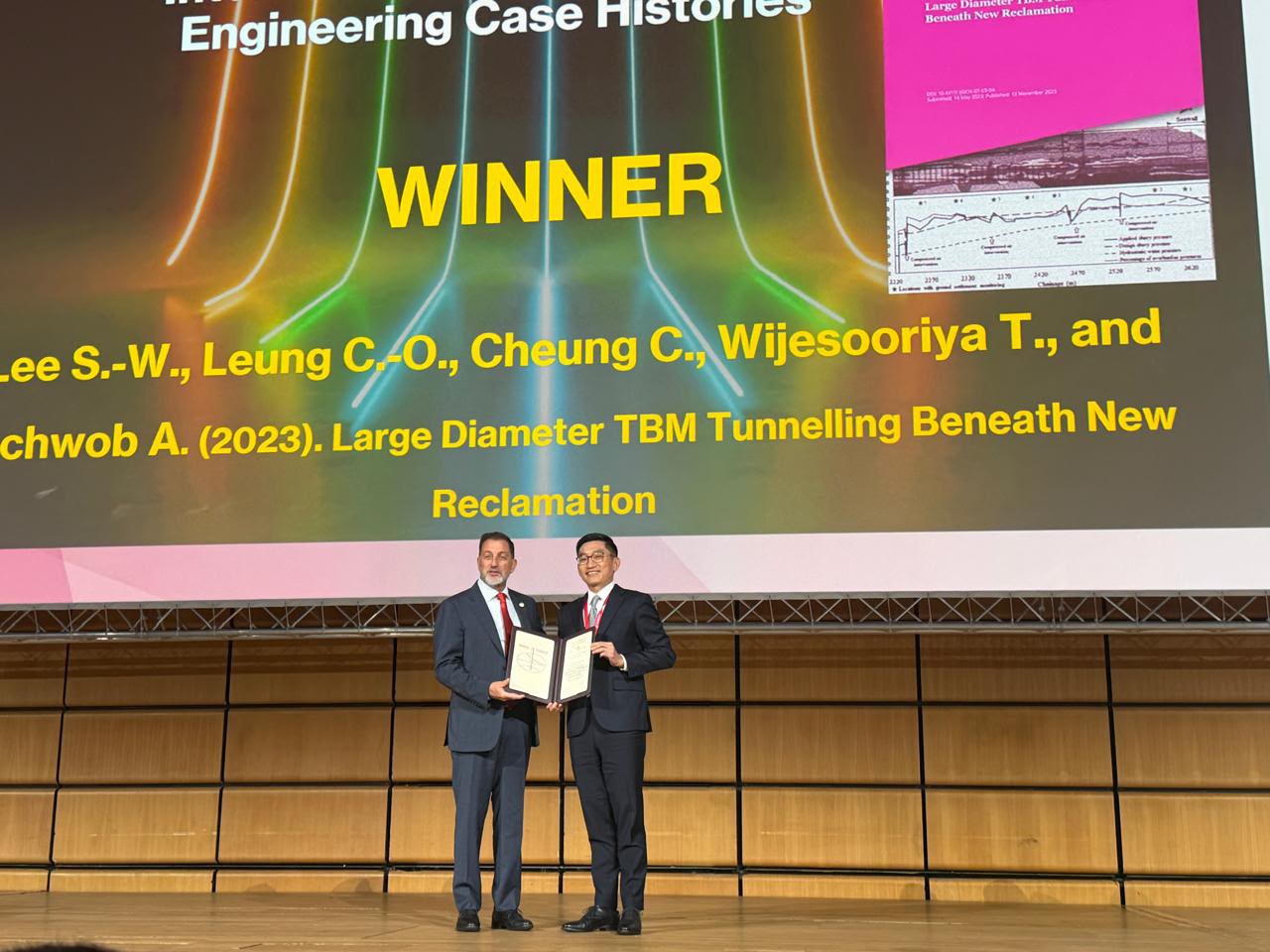
| 2026 | Large Diameter TBM Tunnelling Beneath New Reclamation, International Journal of Geoengineering Case histories, Vol. 7, Issue 3, p.56-77 | Lee, S., Leung, C., Cheung, C., Wijesooriya, T., Schwob, A. |
| 2022 | Singapore Case Histories on Performance of Piles Subjected to Tunnelling-Induced Soil Movement. International Journal of Geoengineering Case histories, Vol.3, Issue 3, p.128-148 | Cham, W.M. |
| 2017 | Liquefaction/Nonliquefaction in the Achaia-Ilia (Greece) 2008 Earthquake: Field Evidence, Site Characterization and Ground Motion Assessment. International Journal of Geoengineering Case histories, Vol.2, Issue 4, p.270-287 | Batilas, A., Pelekis, P., Vlachakis, V., and Athanasopoulos, G. |
| 2013 | Leaning Tower of Pisa: Behaviour after Stabilization Operations. International Journal of Geoengineering Case Histories, Vol.1, Issue 3, p.156-169. | Burland J.B., Jamiolkowski M.B., Viggiani C |
The 2026 Awardee
Lee S.-W., Leung C.-O., Cheung C., Wijesooriya T., and Schwob A. (2023). Large Diameter TBM Tunnelling Beneath New Reclamation
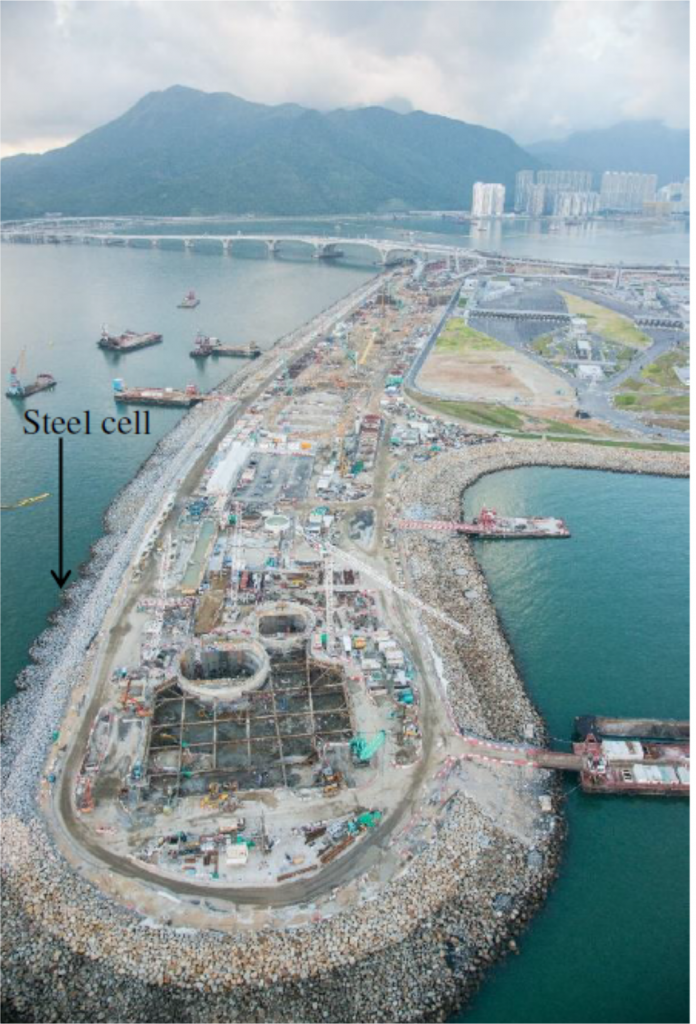
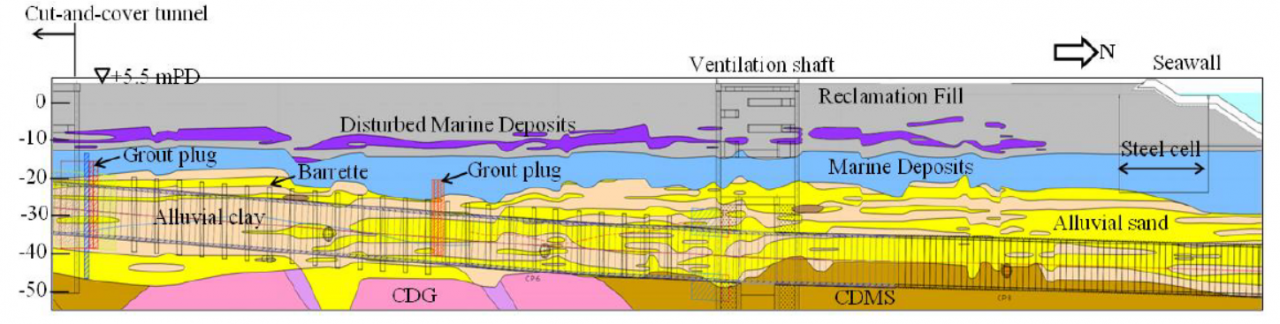
- Very interesting and well documented case study, showing an innovative design that was conceived by installing barrettes at the tunnel spring lines to attract soil arching load caused by the tunnel excavation and transmit the soil load to the deeper dense/stiff Alluvium layer, and to limit the tunnel squat caused by clay compression in the long term.
- Field monitoring and data interpretation